Specializing in the field of yarn dyeing and finishing for 20 years. Contact us for customization
Please Choose Your Language

Views: 0 Author: Site Editor Publish Time: 2026-07-05 Origin: Site
Commercial textile manufacturing constantly faces a core challenge on the production floor. Producers need to achieve a premium, silk-like finish on their fabrics, but they cannot sacrifice the structural durability, moisture absorption, or breathability inherent to natural fibers. Standard unmercerized cotton often falls short when pushed into high-stress or high-aesthetic applications. It suffers from fading dye lots, excessive fiber pilling after minimal wear, poor stitch definition in fine-gauge knitting, and significantly lower tensile strength under mechanical tension on high-speed looms. To solve these manufacturing bottlenecks, mercerization provides a necessary chemical and mechanical intervention. This process fundamentally alters the cellular structure of the raw cotton fiber rather than just coating it. By permanently changing how the fiber handles stress, light, and moisture, this treatment positions Mercerized Cotton Yarn as the standard for premium textile production across global markets.
Structural Integrity: Mercerization increases the tensile strength of cotton fibers by up to 20% (citing global industry reviews), reducing breakage rates during high-speed machine weaving and knitting.
Superior Dye Affinity & Water Absorption: The process permanently alters the fiber's cellular structure to absorb more water and dye, resulting in deeper, more vibrant, and colorfast textiles.
Aesthetic and Functional Upgrades: Provides a permanent silk-like luster, crisp stitch definition, unique fabric movement, and reduced shrinkage compared to untreated textile cotton yarn.
Sourcing Prerequisite: Optimal mercerization requires long-staple or extra-long-staple cotton; utilizing short-staple cotton yields diminishing returns and compromises the final fabric quality.
Production managers must understand the exact physical changes the fiber undergoes during processing. This technical knowledge helps evaluate the premium cost of mercerized yarn and explains why standard cotton fails to replicate these results due to its raw cellular geometry. When you look at raw cotton under a microscope, it resembles a collapsed, twisted ribbon. This irregular shape scatters light, resulting in a matte finish, and creates weak points along the fiber shaft that are prone to snapping under loom tension.
The standard mercerization process treats cotton yarn under strict mechanical tension while submerging it in a highly concentrated sodium hydroxide (caustic soda) solution. Facilities typically maintain the bath at specific temperatures to control the reaction rate. This caustic soda triggers a massive cellular shift within the cellulose structure. The flat, twisted, ribbon-like structure of natural cotton swells rapidly, untwisting and transforming into a smooth, cylindrical, tube-like shape.
This structural change directly correlates to increased light reflection. Because the surface is now smooth and round, light bounces off it uniformly, creating a natural sheen. Furthermore, the swelling expands the internal volume of the fiber. The crystalline structure of the cellulose breaks down slightly, becoming more amorphous, which drastically enhances its water and dye capacity. The yarn can now hold more pigment deep within its core rather than just on the surface.
Fiber Characteristic | Raw Cotton | Mercerized Cotton |
|---|---|---|
Microscopic Shape | Flat, twisted ribbon | Smooth, cylindrical tube |
Light Reflectance | Low (Matte finish) | High (Silk-like luster) |
Cellulose Structure | Highly crystalline | Increased amorphous regions |
Dye Penetration | Surface level, prone to fading | Deep core penetration, highly colorfast |
High-quality mercerization requires strict baseline criteria regarding the raw material. Facilities must use long-staple or extra-long-staple cotton, such as Pima or Egyptian varieties. The staple length refers to the length of the individual cotton fibers before they are spun into yarn. Longer fibers mean fewer ends sticking out of the spun yarn, creating a smoother surface that maximizes the mercerization effect.
The implementation reality on the factory floor is unforgiving if you cut corners here. Mercerizing short-staple cotton results in a brittle yarn. The chemical process swells the short fibers, but because there are so many fiber ends per inch, the yarn creates excessive fly on the production floor, clogging machinery and requiring frequent cleaning stops. The resulting yarn suffers from structural weak points and poor structural integrity, negating the tensile strength benefits the process is supposed to provide.
Short-staple fibers fail to hold tension evenly during the caustic soda bath, leading to uneven swelling.
The high number of fiber ends causes the yarn to pill rapidly, destroying the smooth aesthetic.
Machine operators experience higher rates of yarn breakage, increasing machine downtime.
The final fabric feels harsh and stiff rather than fluid and luxurious.
Evaluating mercerized yarn requires comparing it against standard and combed cotton across critical manufacturing and end-user metrics. You cannot base purchasing decisions solely on the look of the yarn on the cone; you must analyze how it performs under the stress of commercial knitting machines and industrial looms.
Mercerization significantly increases tensile strength. Findings from the Textile and Apparel Market Global Review show up to a 20% increase in strength compared to regular cotton. When the fiber swells and untwists, the internal cellulose chains align more parallel to the fiber axis, allowing them to share mechanical loads more effectively.
This strength translates directly to production outcomes. Facilities experience fewer yarn breakages (ends down) on commercial looms. Loom efficiency rises because operators spend less time tying off broken threads and restarting machines. In the final product, the garment withstands repeated wear and laundering better, maintaining its shape and structural integrity long after standard cotton garments have warped or worn thin at friction points.
The chemistry of dye uptake changes completely after the caustic soda treatment. The swollen, highly amorphous fiber walls absorb water and moisture more readily. They carry reactive dyes more efficiently into the fiber core. Standard cotton often requires multiple dye baths or heavy chemical fixatives to achieve dark shades, and even then, the dye often sits near the surface.
The visual impact of mercerization is immediate. Textiles achieve brighter, deeper, and more saturated colors. Blacks, deep navies, and rich jewel tones resist fading even after heavy UV exposure and repeated industrial washing. Achieving target color depths requires lower dye concentrations in the vats. This improves wash-fastness and reduces effluent waste during production, lowering environmental compliance costs for the dye house.
The visual and tactile properties contrast sharply with untreated yarn. The cylindrical fiber shape creates a permanent, wash-resistant sheen. This differs entirely from temporary wax or silicone coatings that some budget manufacturers apply to mimic the look. Those coatings wash out after a few cycles, leaving a dull fabric. True mercerization alters the physical geometry of the fiber, meaning the luster lasts for the life of the garment.
Mercerized cotton is frequently called the superwash wool of plant fibers. It offers a unique fluid drape and polish. The fabric movement feels cool and luxurious to the touch, making it ideal for garments worn close to the skin. The smooth, round profile is critical for precision applications. Fine lacework, dense weaving, and structured knitwear rely on this crisp stitch definition to showcase intricate patterns without the visual noise of fuzzy fiber ends.
Specific properties of mercerized cotton map directly to ideal commercial use cases. Production lines utilize these traits for distinct market segments, matching the yarn's technical specifications to the end-user's demands.
Luxury garments demand superior drape, breathability, and polish. Golf polos, premium socks, and lightweight summer knitwear rely on these traits to justify their retail price points. In these applications, the fabric must perform under physical stress while maintaining a pristine appearance.
Mercerized yarn excels in fine knits. The yarn's reduced fuzziness prevents pilling, which is the primary cause of garments looking old and worn. It maintains a clean surface aesthetic over years of wear. When knitting fine-gauge fabrics, the smooth yarn feeds evenly through the needles, preventing dropped stitches and ensuring a uniform fabric density.
Home textiles, jacquards, and upholstery require high abrasion resistance. They need structural stability and long-term color retention under light exposure, as furniture often sits near windows. Standard cotton fades quickly and wears thin on armrests and cushions.
The higher affinity for fine-gauge weaving makes it excellent for intricate patterns. Dense, high-thread-count fabrics benefit immensely from this structural stability. The increased tensile strength allows weavers to pack the weft yarns tightly, creating a dense, durable fabric that resists snagging and tearing while maintaining a subtle, elegant sheen.
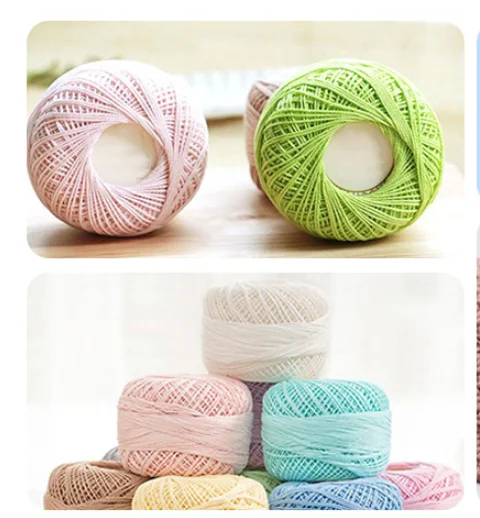
Specialized markets demand crisp stitch definition. Crochet, amigurumi, and tatting require a lack of fiber splitting. When crafters use small hooks, yarn that splits causes frustration and ruins the texture of the piece.
Amigurumi and miniature toy creation have specific functional demands. The fabric must maintain a rigid, durable shape. It must hold stuffing without stretching or shedding fiber. Mercerized yarn provides the necessary stiffness and structural hold, ensuring the finished pieces maintain their intended proportions and withstand handling.
Upgrading to mercerized cotton involves a calculated financial decision. The overall value influencing factors extend beyond the initial purchase order. Production managers must look at the total lifecycle of the yarn, from the knitting machine to the consumer's closet.
The upfront cost per kilogram is higher. It costs more than standard or combed textile cotton yarn because of the additional chemical processing, tensioning equipment, and the requirement for long-staple raw cotton. However, lifecycle benefits offset these initial costs.
The end product commands premium pricing in the retail market. The garment lifespan increases significantly, building brand loyalty. Customer returns drop due to reduced fading, shrinking, or pilling. When you factor in the reduction in defective merchandise, the higher initial material cost often results in better overall profit margins.
Hidden savings emerge on the factory floor. Manufacturing downtime drops due to reduced yarn breakage on high-speed machines. Every time a machine stops for a broken yarn, you lose production volume and incur labor costs to fix it.
Weaving defect rates fall because the yarn is more uniform and stronger. Dye lot matching becomes far more predictable. Because the swollen fibers absorb dye so efficiently and consistently, dye houses experience fewer rejected batches, reducing wasted water, chemicals, and time.
Vetting suppliers and ensuring production quality requires a strict framework. Implementation risks exist and require proactive mitigation to prevent costly production errors.
Counterfeit or poorly processed yarns flood the market. Some suppliers use temporary silicone, wax, or resin coatings to mimic mercerized sheen, passing off cheaper yarn at premium prices. You must test incoming shipments rigorously.
True mercerization survives high-temperature washing. Chemical coatings wash out quickly. They leave the yarn dull, limp, and prone to splitting. Run sample cones through standard industrial wash tests before approving bulk orders. If the luster disappears or the yarn becomes fuzzy, reject the batch.
Test Method | True Mercerized Yarn | Coated Fake Yarn |
|---|---|---|
Industrial Wash Test (90°C) | Retains full luster and smooth texture | Loses sheen, becomes fuzzy and dull |
Dye Penetration Audit | Color is uniform through the fiber core | Color is concentrated on the surface |
Tensile Pull Test | High breaking strength | Snaps easily under tension |
Working with mercerized yarn on the production line requires adjustments. It has less stretch and elasticity than untreated cotton or natural wool. Because the fibers have already been stretched and set during the caustic soda bath, they do not give as much during knitting or weaving.
Adjust machine tension settings carefully. Lower the tension slightly to prevent dropped stitches, loop distortion, or warped weaves. Account for the altered shrinkage rates in pattern drafting. Mercerized yarn has already been pre-shrunk under tension, so it will shrink significantly less than standard cotton when washed by the consumer. Adjust your grading and sizing templates accordingly to avoid garments that fit too loosely after the first wash.
To successfully integrate this material into your production lines, follow these immediate next steps:
Specify staple length alongside mercerization when drafting supplier requests for proposals to ensure baseline quality.
Request undyed and dyed sample cones from suppliers to run tension tests on your specific machinery.
Conduct dye penetration audits and wash-fastness trials before committing to bulk orders.
Calibrate your knitting and weaving machine tension settings to accommodate the reduced elasticity of the treated yarn.
A: Combed cotton undergoes mechanical brushing to remove short fibers, resulting in a softer yarn. Mercerized cotton undergoes a chemical-mechanical structural alteration using sodium hydroxide. This permanently changes the fiber shape, adding strength, luster, and superior dye affinity.
A: Mercerization pre-shrinks the fiber under tension during processing. This results in significantly less shrinkage than untreated textile cotton yarn when washed by the end consumer.
A: The chemical treatment removes surface fuzz and creates a cylindrical fiber shape. This creates a smoother, cooler, and slightly stiffer hand-feel with unique drape and fabric movement.
A: Yes. It offers a lack of splitting, high stitch definition, and strong structural hold. It is the preferred choice over standard cotton for showcasing intricate stitch work and holding stuffing securely.
A: Yes. It has superior water absorption and dye affinity. The swollen fibers take up reactive dyes more efficiently, resulting in brighter, deeper, and more colorfast shades.
A: Yes. The sheen is a result of permanent physical and cellular changes to the cotton fiber. It will not wash out or wear away over time like temporary wax coatings.
A: The chemical treatment removes surface fuzz and smooths the fiber. This mimics the soft, machine-washable, low-friction, and highly drapeable properties of treated wool while remaining entirely plant-based.