Specializing in the field of yarn dyeing and finishing for 20 years. Contact us for customization
Please Choose Your Language

Views: 0 Author: Site Editor Publish Time: 2025-11-07 Origin: Site
In today’s textile industry, sustainability has become more than just a trend — it’s a responsibility. As consumers grow increasingly conscious about the environmental impact of fashion, brands and manufacturers are rethinking their material choices. Among the most discussed options are recycled fibers, particularly recycled polyester, and traditional natural fibers such as cotton.
Both materials have distinct characteristics, advantages, and environmental implications. But the question remains: Is recycled polyester better than cotton? To answer this, it’s essential to explore their production processes, performance, sustainability, and long-term impact on the environment and consumers alike.
Recycled polyester, often abbreviated as rPET, is derived from post-consumer and post-industrial waste — primarily discarded plastic bottles and old polyester garments. These materials are cleaned, shredded into flakes, melted, and then re-spun into fibers suitable for weaving and knitting. The process gives a second life to plastic waste that would otherwise end up in landfills or oceans.
This approach makes recycled polyester one of the leading recycled fibers in the global textile industry. It retains the strength, durability, and versatility of virgin polyester while significantly reducing energy consumption and greenhouse gas emissions.
Cotton, on the other hand, is a natural fiber harvested from the cotton plant. It’s known for its breathability, softness, and comfort — qualities that make it a staple in apparel and home textiles. However, cotton cultivation is resource-intensive, requiring vast amounts of water, pesticides, and arable land. While organic cotton aims to mitigate some of these issues, traditional cotton farming still poses environmental challenges.
One of the most striking differences between the two materials is water usage.
Cotton: Producing one kilogram of cotton can require up to 10,000–20,000 liters of water, depending on growing conditions. This demand places immense stress on water-scarce regions.
Recycled Polyester: In contrast, rPET production requires virtually no new water for cultivation and uses far less in processing. Since it relies on recycled plastics, it diverts waste while conserving water resources.
Recycled polyester consumes about 30–50% less energy than virgin polyester and emits fewer greenhouse gases. However, compared to cotton, polyester in general — including recycled versions — still requires significant energy input during production and processing. Cotton farming uses less energy but contributes heavily to water and land depletion.
Cotton farming occupies large areas of arable land and often involves chemical fertilizers and pesticides, which can lead to soil degradation and water pollution. Recycled polyester, by contrast, requires no farmland, helping alleviate the burden on agricultural ecosystems. It also reduces plastic pollution by transforming waste into functional textiles.
A notable downside of polyester — recycled or not — is microplastic shedding during washing. These tiny particles can enter waterways and harm marine ecosystems. Cotton, being biodegradable, doesn’t have this issue. However, ongoing research is developing coatings and washing solutions that minimize microfiber release from synthetic textiles.
One of the major advantages of recycled polyester lies in its exceptional durability. It is inherently strong, resistant to stretching, shrinking, and abrasion, and retains its shape even after extensive use and repeated washing. These properties make it ideal for demanding applications such as sportswear, outdoor gear, workwear, and industrial textiles, where longevity and performance are crucial. Additionally, recycled polyester fibers are less prone to pilling and tearing, extending the product’s lifespan and reducing the need for frequent replacement.
By comparison, cotton, although valued for its natural softness and comfort, tends to wear out faster. It can shrink when exposed to heat and lose its structural integrity over time, particularly in garments that undergo frequent laundering. For consumers seeking long-lasting garments or manufacturers focused on product durability, recycled polyester presents a more sustainable option in the long term.
Comfort is one of the main reasons cotton remains a dominant fiber in apparel. It is naturally breathable and moisture-absorbent, allowing air circulation that helps regulate body temperature. This makes cotton fabrics ideal for casual clothing, undergarments, and bedding where comfort and skin-friendliness are top priorities.
Recycled polyester fabrics are low-maintenance and convenient, aligning with modern consumer lifestyles. They dry quickly, resist wrinkles, and maintain their color and shape over time. This ease of care reduces energy consumption from washing and ironing, further supporting sustainability goals.
Recycled polyester is also remarkably versatile. It blends easily with fibers like cotton, spandex, or nylon to produce fabrics that balance the best properties of each material — the comfort and breathability of cotton combined with the durability and elasticity of polyester. These blends are widely used in fashion, home textiles, and industrial applications. Manufacturers can customize performance features such as stretch, moisture management, and texture, offering consumers diverse options that cater to both comfort and sustainability.
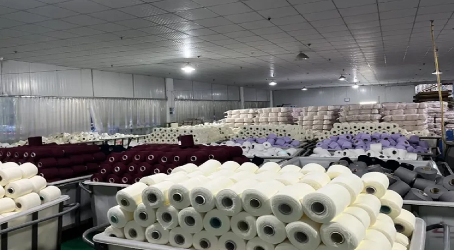
The textile industry is undergoing a significant transformation as brands and manufacturers seek cost-effective yet sustainable solutions. Recycled fibers like rPET have gained prominence because they align with both economic and environmental goals.
Recycled polyester benefits from a stable and scalable supply chain. The global availability of PET bottles and post-industrial polyester waste provides a consistent source of raw material, insulating manufacturers from the price volatility seen in agricultural commodities. The production process for rPET is also more predictable, less affected by weather, and can be localized near recycling facilities, reducing transportation costs and carbon emissions.
Furthermore, the manufacturing of recycled polyester has achieved cost efficiency through technological advancements. Improved collection systems, automated sorting, and closed-loop recycling technologies have made it possible to produce high-quality rPET fibers at competitive prices. This enables textile producers to meet growing sustainability standards while maintaining profitability.
In contrast, cotton faces greater economic uncertainty. Its supply is heavily influenced by climate conditions, pest infestations, and land availability, making prices fluctuate significantly from season to season. Additionally, cotton production requires vast agricultural resources, leading to challenges in scalability as global demand increases. While organic cotton initiatives have gained traction, they remain limited due to higher costs and lower yields compared to conventional farming.
Modern consumers are becoming more eco-conscious and demand transparency in sourcing and production. Recycled polyester has gained popularity among brands promoting circular fashion and waste reduction. Major sportswear and fashion companies have pledged to use 100% recycled polyester in the coming years to meet sustainability targets.
Cotton remains deeply associated with comfort and natural purity, which continues to appeal to many consumers. However, awareness of its water footprint and pesticide use has led to growing interest in organic cotton and recycled alternatives.
In short, both materials are adapting to evolving market demands — cotton through organic and sustainable farming practices, and polyester through recycling and innovation.
Neither material is perfect, but both are evolving toward sustainability. The future lies in hybrid solutions, such as cotton-polyester blends made from recycled fibers, and in advancements in recycling technology that allow both synthetic and natural textiles to be reprocessed more efficiently.
Researchers are also exploring chemical recycling of polyester, which breaks down polymers to their basic monomers for reuse, achieving near-virgin quality with lower environmental impact. Meanwhile, innovations in waterless dyeing, biodegradable polyester, and closed-loop manufacturing are shaping the next generation of eco-friendly fabrics.
Determining whether recycled polyester is better than cotton ultimately depends on the intended use and sustainability priorities.
Comparison Aspect | Recycled Polyester (rPET) | Cotton |
Origin | Derived from recycled plastic bottles and textiles | Natural plant-based fiber |
Water Usage | Very low | Very high |
Energy Consumption | Moderate | Lower than virgin polyester |
Carbon Emissions | Lower than virgin polyester | Moderate |
Biodegradability | Non-biodegradable | Biodegradable |
Durability | Very high | Moderate |
Comfort | Moderate | Excellent |
Maintenance | Easy care, wrinkle-resistant | Requires more care |
Microplastic Risk | Yes | No |
Sustainability Focus | Reduces plastic waste | Renewable but water-intensive |
In applications where durability, performance, and moisture resistance are critical — such as activewear, outdoor gear, and technical fabrics — recycled polyester is often the better choice. For everyday wear, home textiles, or sensitive skin, cotton remains unmatched in comfort and breathability.
The debate between recycled polyester and cotton is not about choosing one over the other, but about understanding their roles in sustainable textile production. Recycled polyester reduces waste and conserves resources, while cotton offers natural comfort and biodegradability. Together, they form the foundation for a more circular and responsible fashion industry.
As technology evolves, recycled fibers — particularly rPET — will continue to shape the future of textiles, offering innovative solutions that merge sustainability with performance.
If you are looking to explore high-quality recycled polyester fabrics and advanced fiber dyeing and weaving technologies, you can learn more from Wuhu Fuchun Dyeing & Weaving Co., Ltd.. The company specializes in eco-friendly textile production and is committed to developing sustainable materials that meet modern market demands. For more details or collaboration inquiries, you are welcome to contact their expert team.


