Specializing in the field of yarn dyeing and finishing for 20 years. Contact us for customization
Please Choose Your Language

 |
| Quantity: | |
|---|---|
Compact spinning represents a fundamental structural advancement in yarn manufacturing, engineered to physically reorganize the fiber arrangement during the critical spinning phase. By effectively eliminating the traditional spinning triangle, this advanced method gathers and aligns fibers tightly before the final twist is applied. The immediate physical result is a yarn with drastically reduced surface hairiness and exceptional evenness. When handling the finished yarn, operators notice a distinctly smooth tactile feel and a clean, uniform visual profile. This concentrated structural density translates directly into superior tensile strength, allowing textile producers to achieve consistent performance in subsequent weaving and knitting operations. Furthermore, the integration of precision pneumatic or mechanical compacting systems optimizes airflow and mechanical tension. This actively controls energy consumption per spindle while minimizing raw material fly loss across the production floor, ensuring a highly efficient manufacturing environment.
The production process of compact spinning yarn mainly includes the following meticulously controlled steps, each contributing directly to the final physical properties of the textile material:
The initial phase requires operators to select suitable fibers as raw materials, such as natural cotton fiber, synthetic polyester fiber, or complex customized blends. The equipment demonstrates extensive flexibility, easily adapting to various raw material specifications. The fiber needs to be pre-treated, including rigorous cleaning, precise impurity removal, and conditioning, to ensure the quality and purity of the fiber. This careful preparation guarantees that the raw material entering the system is free from abrasive contaminants, setting a reliable foundation for a continuous drafting sequence.
During this stage, the pre-treated fiber is sent to the opening machine, and the fiber is loosened through the precise action of mechanical force and controlled air flow. This systematic separation is convenient for subsequent spinning treatment. By utilizing aerodynamically optimized opening chambers, the machinery ensures that the fibers are gently separated without causing microscopic damage or unnecessary breakage, preserving the natural staple length required for maximum yarn strength while maintaining strict energy efficiency.
Once properly opened, the fiber after opening is sent to the juxtaposition machine, and the fiber is juxtaposition through the action of the juxtaposition machine to form a continuous, uniform fiber belt. This alignment process demands heightened mechanical precision. The fibers are aligned parallel to one another, creating a web that is subsequently condensed into a sliver. The visual uniformity of this fiber belt directly impacts the evenness of the final compact yarn, ensuring there are no dense clusters or weak, thin sections.
Following alignment, the fiber belt is fed into the stretching machine, and the fiber in the fiber belt is stretched through the action of the stretching machine to increase the length and strength of the fiber. The drafting zones apply calculated mechanical tension, attenuating the sliver into a much finer roving. This controlled elongation process straightens any remaining hooked fibers, maximizing the effective length and ensuring that the structural integrity of the material is fully optimized before the final twist is introduced.
In the most critical operational phase, the stretched fiber belt is fed into the spinning machine, and the fiber belt is spun into yarn after the spinning machine is processed. The working principle of the spinning machine is to stretch, twist and refine the fiber strips, so that the fibers are combined with each other to form yarn. Because the spinning triangle is eliminated, peripheral fibers are completely integrated into the yarn body. This physical transformation lowers the overall twist requirement while significantly reducing end breakages. Consequently, production facilities can maintain higher spindle speeds. The modern spinning frames also support automated splicing and doffing operations, which elevates overall production efficiency and reduces the need for manual intervention on the factory floor.
Post-spinning, the system moves to finishing the spun yarn, including cleaning, removing impurities, drying and other specialized processing, in order to improve the quality and purity of the yarn. Modern finishing lines integrate smart monitoring and digital management systems. These digital tools provide real-time, single-spindle monitoring, allowing operators to visualize production data and maintain precise quality control. Any deviations in yarn diameter or tension are immediately detected and corrected, ensuring every spool meets exact dimensional specifications.
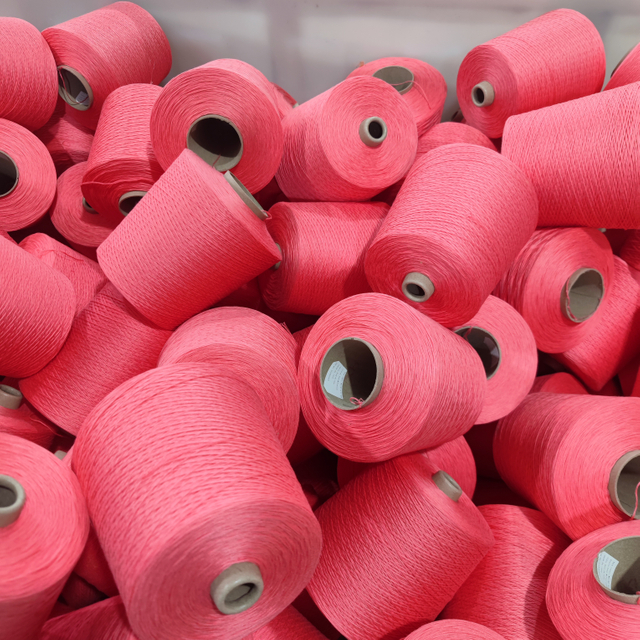
Finally, the finished yarn is packed, usually with a paper tube or a plastic tube, to facilitate safe transportation and long-term storage. The winding process is carefully tensioned to prevent crushing the inner layers of the yarn. Proper packaging protects the smooth surface and structural properties of the compact yarn, ensuring it arrives at downstream weaving or knitting facilities in pristine condition, ready for immediate deployment.
The above is the general production process of tight spinning yarn, the specific process may vary depending on the spinning process and fiber type. Other processes such as dyeing, warping and sizing may also be involved in the production process to meet different needs and product requirements.
The superior physical characteristics of compact spun yarn make it an ideal foundation for demanding downstream applications, directly influencing the sensory and structural qualities of the final textile. The yarn delivers exceptional performance in premium woven and knitted apparel fabrics, providing a noticeably soft, luxurious touch against the skin and crisp, defined visual clarity for complex print patterns. Beyond consumer apparel, the inherent structural density and reduced hairiness of the yarn are highly valued in specialized industrial textiles. This includes the manufacturing of durable, high-traffic carpets and precision filtration materials that require exact porosity and unyielding tensile strength under continuous pressure.
To support diverse manufacturing environments and scale with facility growth, the compacting technology is engineered with adaptability in mind. It is available as a modular retrofit solution, which enables textile producers to efficiently upgrade their existing ring spinning frames. This modular approach significantly elevates production capabilities without the capital expenditure required for entirely new production lines.
Customized Equipment Solutions: Comprehensive OEM and ODM services are available to tailor the spinning machinery to specific factory floor layouts, ambient climate conditions, and precise production targets.
Operational Training and Guidance: Rapid-response technical training programs ensure that floor operators fully understand the pneumatic and mechanical nuances of the compacting process, promoting safe and efficient daily operations.
Long-Term Maintenance Assurance: A guaranteed, long-term supply network of original spare parts minimizes unexpected mechanical downtime and preserves the operational efficiency of the spinning frames over their entire lifecycle.